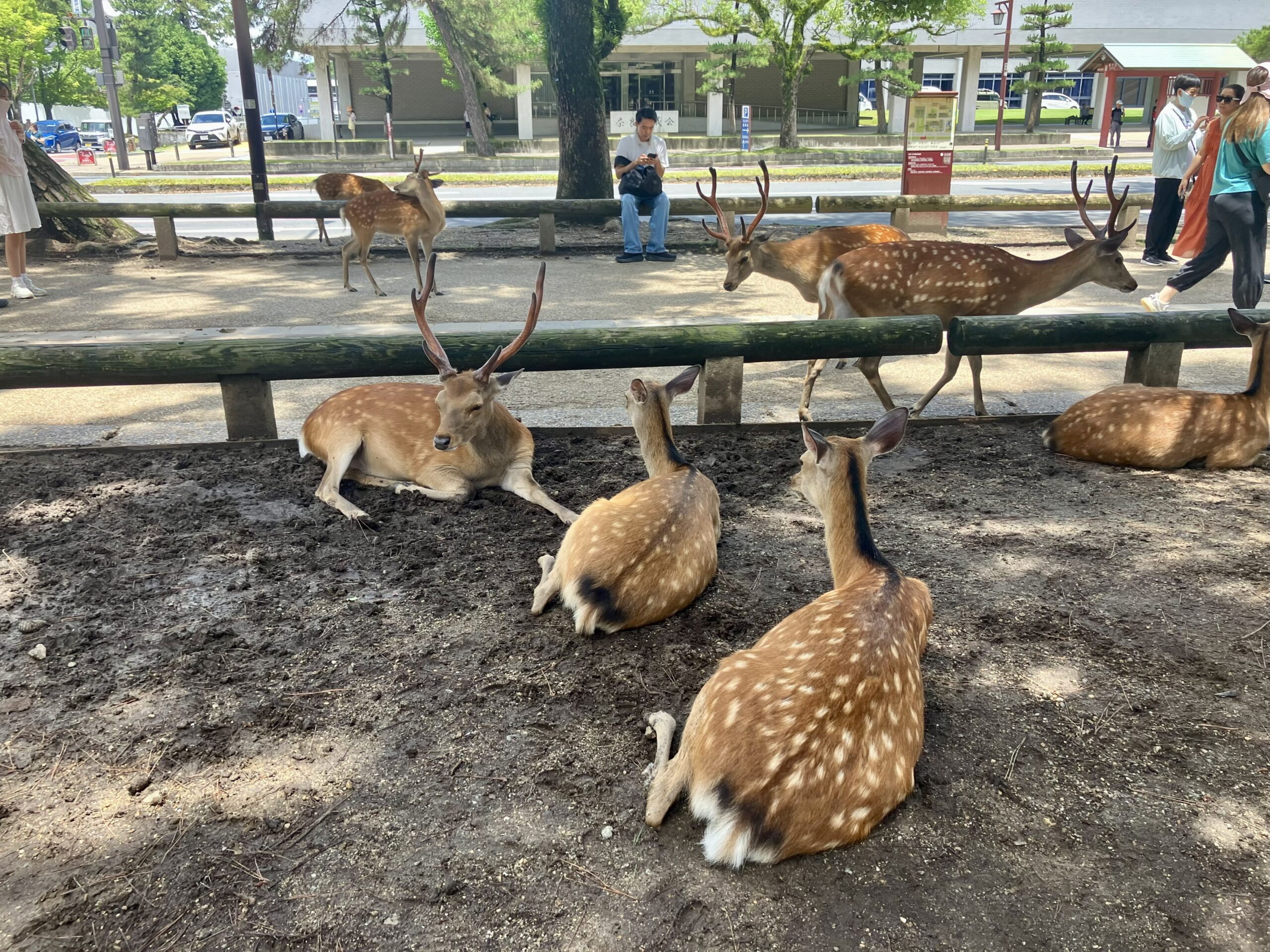
The surprising other side of Japan – honor for sika deer
Contrast of Two Worlds
In my previous article about Japan, I wrote about the problematic aspects of this country, especially about animal cafes on Takeshita Street. Animals here live in an artificial and often stressful environment for the amusement of tourists. But Japan also has its second, surprisingly beautiful side. In Nara Park, I discovered something completely different – a place where people treat animals with respect, love, and deep reverence that reaches back more than 1300 years in history.
History of the Sacred Deer and Nara Park
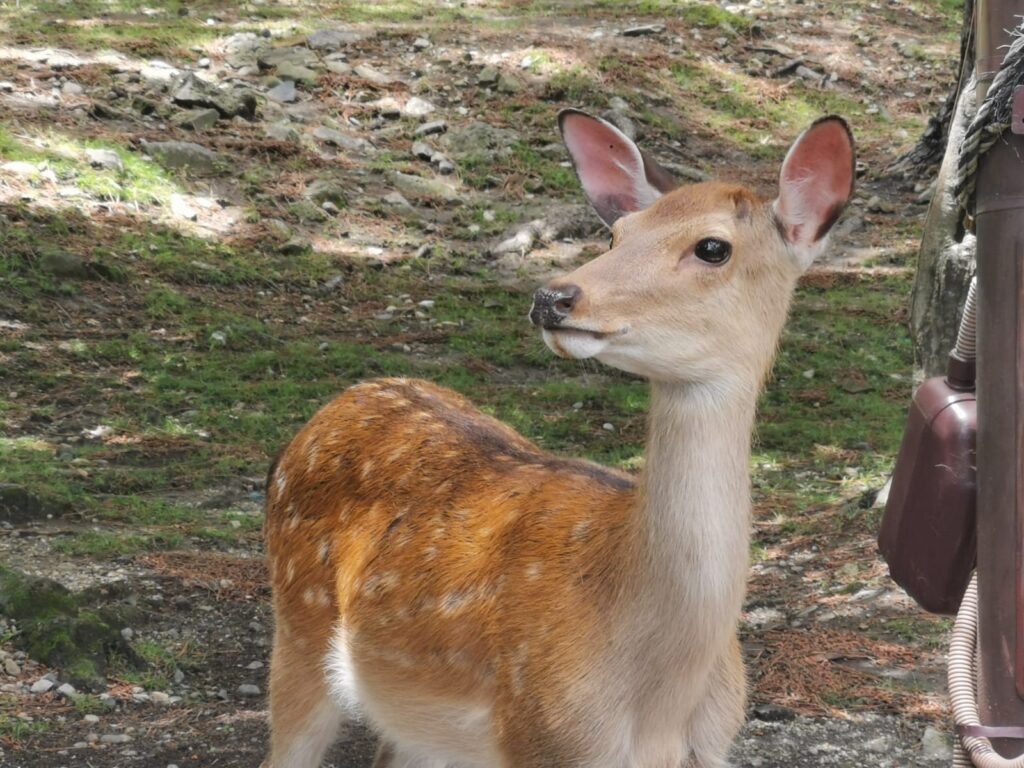
The story of the sika deer in Nara begins in 768 when the Kasuga Taisha Shrine was founded. According to Shinto legend, the thunder god Takemikazuchi traveled from Ibaraki Prefecture to Mount Mikasa in Nara – riding on the back of a white sacred deer. From then on, deer in this area began to be regarded as messengers of the gods (kami) who watch over the city and its inhabitants.
This reverence was not merely symbolic. Until 1637, killing a deer was punishable by death. Historical records from the Kamakura period (1185–1333) even document the execution of a person who killed a deer. This strict protection ensured the deer in Nara survived centuries while they were nearly wiped out elsewhere.
After World War II, the deer were officially designated as national natural monuments and remain protected today. A genetic study in 2023 confirmed that deer in Nara Park are genetically unique – their lineage split from other populations about 1400 years ago, which corresponds to the founding of Kasuga Taisha Shrine.
Why Are Deer Considered Sacred?
In Shintoism, the indigenous religion of Japan, sika deer are seen as mediators between mortals and the kami – divine spirits. They are not gods in the Western sense but sacred beings possessing spiritual power and significance.
The legend says that the god Takemikazuchi carried a scroll in his mouth and announced to people that deer would from then on carry messages about them to the gods. This belief has endured for over a millennium and shapes the relationship between people and deer to this day.
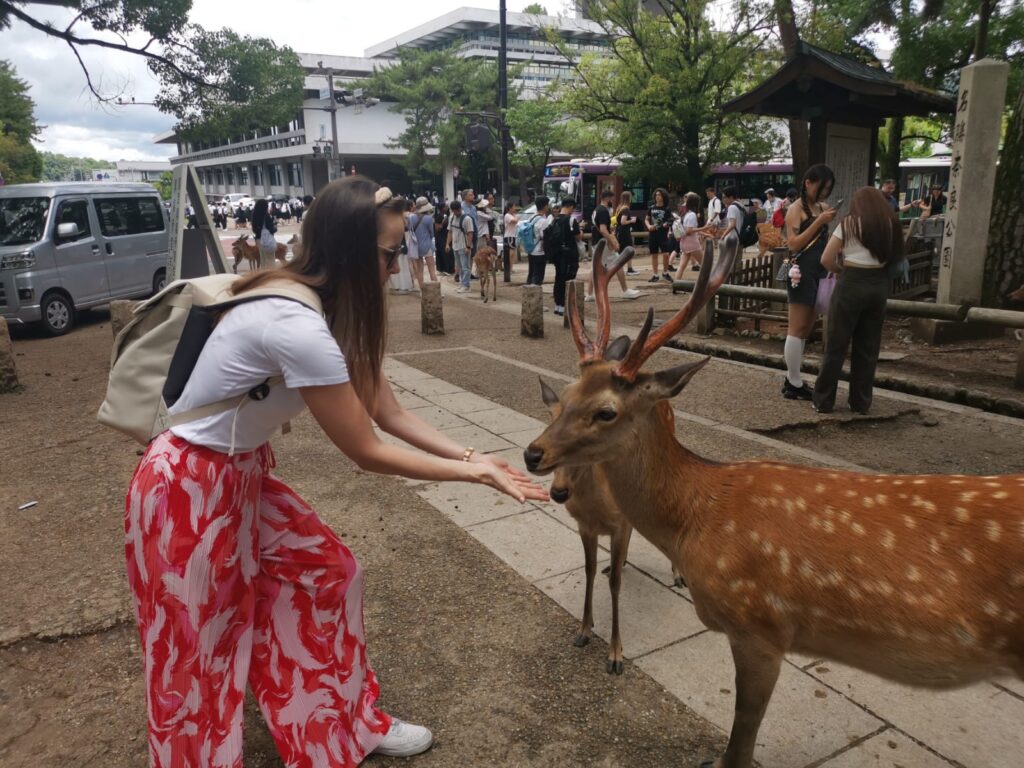
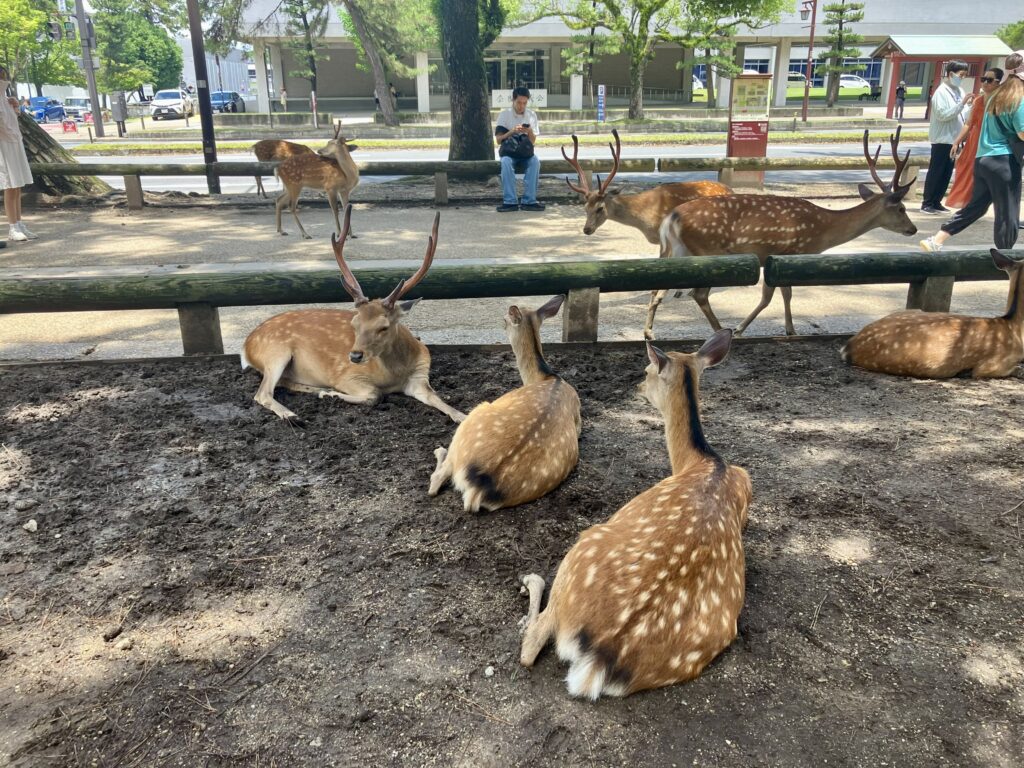
Today, about 1200 to 1500 deer freely live in Nara Park. They are known to “bow” to visitors before receiving special rice crackers (shika senbei). This behavior is learned—they know that bowing likely brings a reward. Research from 2023 showed that during the COVID-19 pandemic, when tourists decreased, deer bowed less often, confirming this behavior is learned and related to human interaction.
Principles of Shintoism – Path of the Gods
Shintoism, whose name literally means “path of the gods”, is the oldest religion in Japan. Unlike many world religions, it has no founder, central authority, or a single sacred book. It developed organically from animistic beliefs among the Japanese people.
Key principles of Shintoism include:
Kami – divine spirits inhabiting natural phenomena, places, ancestors, and historical figures. It’s estimated that a single grain of rice may contain up to seven kami.
Purity – physical and spiritual cleanliness is fundamental to Shinto practice. Ritual washing is part of everyday life.
Harmony (wa) – exists in all things and must be maintained. Disruption of harmony causes impurity.
Respect for nature – Shintoism teaches that nature is inhabited by kami and should be revered.
Family values – respect for family and ancestors is one of the four affirmations of Shintoism.
Magokoro (sincere heart) – being honest, truthful, and striving daily to do one’s best.
Fascinating Shinto Rituals
During my trip to Japan, I visited many Shinto shrines and was fascinated by rituals completely unknown to Europeans. Here are some of them.
Entrance to the Sacred Space
Every Shinto shrine has a torii gate – a symbolic passage between the secular world and the sacred space. Tradition says that one should bow once before the gate and avoid walking exactly through the center, instead passing just to the left or right.
Purification Ritual at Temizuya
Before entering the shrine, visitors purify themselves at the temizuya – a water basin. The ritual has precise steps: scoop water with the right hand and pour it over the left hand, then scoop water with the left hand and pour it over the right, finally scoop water into the left palm and rinse the mouth (the ladle never touches the lips).
Prayer Ritual
At the altar, a precise ritual is performed: throw a coin into the donation box, ring the bell to greet the deity, bow twice, clap twice (express joy and respect towards the deity), pray with hands joined, and finally bow once.
Kasuga Taisha and Mantōrō Ceremony
Kasuga Taisha is the most famous shrine in Nara, dedicated to the deities protecting the city. The shrine is known for its 3000 lanterns – hundreds of bronze lanterns hang inside buildings and stone lanterns line the paths nearly a kilometer long. Twice a year, in February and August, all lanterns are lit simultaneously during the mantōrō ceremony, creating a mesmerizing spectacle of flickering flames.
Other Rituals
I also visited Haraedo Shrine, dedicated to the cleansing goddess Seoritsuhime-no-Kami. In summer, a ceremony takes place where visitors pass through a large grass ring (chinowa), symbolically purifying all who pass through it.
Modern Deer Protection – Tradition Continues
Even in modern times, the Japanese care for deer with admirable respect and precision.
Shika no Tsunokiri – Antler Trimming Ceremony
Every October, the 350-year-old antler trimming ceremony (Shika no Tsunokiri) takes place in Nara. This ritual, started in 1672, protects people and other deer from injuries during the autumn mating season when males become more aggressive.
The ceremony is held in a special arena called Rokuen. Men known as seko (deer herders) catch three to four male deer by their antlers with lassos, hold them, and a Shinto priest gives them water to calm down. Then the antlers are trimmed, and the deer are released back into the park. At the end, the antlers are offered as a gift to the deity of Kasuga Taisha.
Many worry if this ritual harms the deer, but the antler trimming is not painful – antlers regrow every year. The ceremony actually protects both the deer and people from injuries.
Stricter Protection Laws
In April 2025, stricter regulations were adopted for deer protection in Nara Park. These changes were prompted after a video surfaced in July 2024 showing people kicking and hitting deer.
Under the Cultural Properties Protection Act, harming deer can lead to imprisonment of up to five years or a fine of up to 1 million yen (approximately $6500). For foreigners, violations can also mean deportation and a ban on future entry into the country.
The new regulations now also include acts that may cause external injury to deer or force them into such harmful actions.
Genetic Uniqueness
A recent scientific study from 2023 revealed that the deer in Nara Park are genetically unique due to over a thousand years of protection. While 18 mitochondrial DNA genotypes were identified on the Kii Peninsula, only one unique genotype (S4) was found in Nara Park deer, which does not occur elsewhere.
This genetic divergence occurred around 1400 years ago, corresponding to the year 768 when Kasuga Taisha Shrine was built. The results confirm that the Japanese people have protected the deer in this area for more than a millennium as messengers of the gods, enabling the population to be maintained from generation to generation.
Personal Experience – Two Worlds of One Country
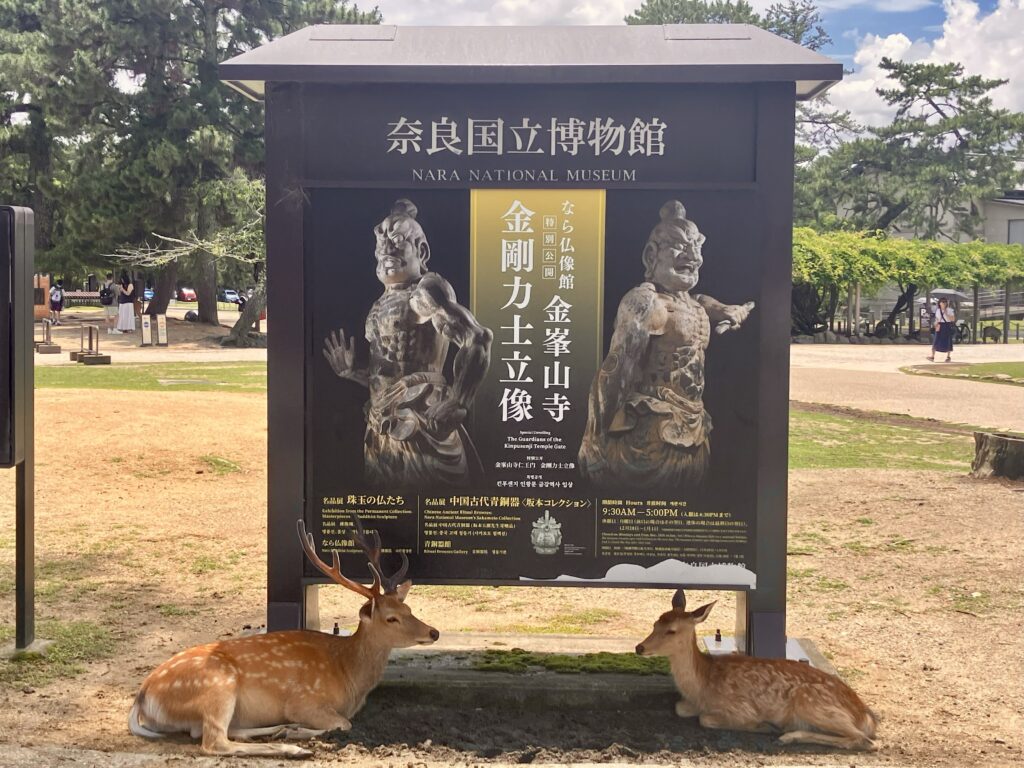
Standing in Nara Park, watching sika deer roam freely among people, bow to visitors, and rest peacefully near ancient shrines, I couldn’t help but recall the stark contrast with my experience on Takeshita Street in Tokyo.
There, I saw animal cafes, where pigs or cats live in cramped, noisy, and stressful conditions in the middle of a bustling shopping street, serving only as tourist attractions. In Nara, however, I saw the opposite – animals that are worshiped, protected by law, and living freely in a historic park spanning 660 hectares.
This contrast perfectly illustrates two faces of Japan. On one side, a country sometimes favoring commerce and entertainment over animal welfare. On the other side, a country with a deep spiritual tradition that teaches respect for nature and harmony with living beings.
The deer in Nara gave me hope. They showed me that there is a way for people and wild animals to coexist in respect and mutual reverence. It is not just about protecting animals – it is about preserving a spiritual tradition that teaches us that nature is sacred and deserves our care.
Conclusion – A Lesson for the Future
The history of the sika deer in Nara Park is a story of over a thousand years of protection, respect, and harmonious coexistence. It proves that when people approach animals with respect and spiritual reverence, something extraordinary and beautiful can emerge.
For me personally, visiting Nara was one of the most powerful experiences. After critical experiences in Tokyo, I found true beauty in Japanese culture here – the connection of spirituality, nature, and tradition that has lasted for more than 1300 years.
If you plan a trip to Japan, definitely visit Nara Park. It is a place where you can directly touch living history, meet messengers of the gods, and experience what it means when culture truly honors animals.
For more articles on responsible travel and animal protection, visit faunastika.com where I write about animal shelters, responsible whale watching, and animal sanctuaries.
Are you looking for an animal shelter, sanctuary for farm animals in Europe? Here are some tips:

https://faunastika.com/index.php/meet-the-residents-of-the-dog-shelter-in-spain-aprop-pego/

https://faunastika.com/index.php/practical-volunteering-what-we-experienced-during-our-second-visit-to-the-horsesanctuary-domov-pro-kone/

https://faunastika.com/index.php/how-was-my-week-as-a-volunteer-at-tenerife-horse-rescue/
Faunastika Youtube Channel
A Visit at Animal Wellness Trust Sri Lanka: Saving Stray Dogs since 2017
See how every donation, volunteer, and visitor makes a difference. Whether it’s through financial support, hands-on help, or simply spreading the word, you too can be part of this life-changing mission.
🔗 Want to learn more? Visit my blog for the full story, photos, and ways you can help:
👉 [faunastika.com/index.php/animal-wellness-trust-sri-lanka-a-sanctuary-changing-the-lives-of-hundreds-of-dogs/](https://faunastika.com/index.php/animal-wellness-trust-sri-lanka-a-sanctuary-changing-the-lives-of-hundreds-of-dogs/)
💙 Support the shelter:[animalwellnesstrust.org](https://www.animalwellnesstrust.org/)
🐾 Follow my journey for more stories on animal welfare and ethical travel.
#AnimalRescue #SriLanka #StrayDogs #AnimalWellnessTrust #CompassionInAction #travelforgoodShow More





Stay updated—have the newest posts emailed to you.