Sloboda zvierat: Three Decades of Work That Changed the Face of Animal Protection in Slovakia
Sloboda zvierat is now one of the best‑known non‑profit organizations in Slovakia. Its name is familiar to people across generations — from those who remember its beginnings in the 1990s to young volunteers who come today to walk dogs at the shelter in Polianky. For many, including myself, Sloboda zvierat is a symbol of the first realization that animals need protection, structure, and people who will stand up for them.
The Birth of the Organization: When Passion Replaced Infrastructure
Sloboda zvierat was founded in 1992, at a time when Slovakia was undergoing major social changes. Animal protection was on the margins of public interest, legislation was outdated, and shelters functioned mostly as improvised spaces without clear standards.
In the early years, they operated literally “on their knees.” Animals were rescued from streets, basements, and backyards, and many were temporarily housed in private homes. There were no grants, no 2% tax donations, no corporate partners. There was only determination and the belief that animals deserved better.
Building a System: From the First Adoptions to Legislative Change
In the 1990s, Sloboda zvierat gradually introduced what we now consider standard practice:
- the first organized adoptions,
- the first neutering programs,
- the first campaigns against puppy mills,
- the first public fundraisers for animals,
- the first cases of removing abused animals from their owners.
The organization became the voice of animals in the media and in parliament. It significantly contributed to the adoption of the animal protection law, which gradually tightened breeding conditions and penalties for cruelty.
The Sloboda Zvierat Shelter in Polianky: A Milestone That Changed Everything
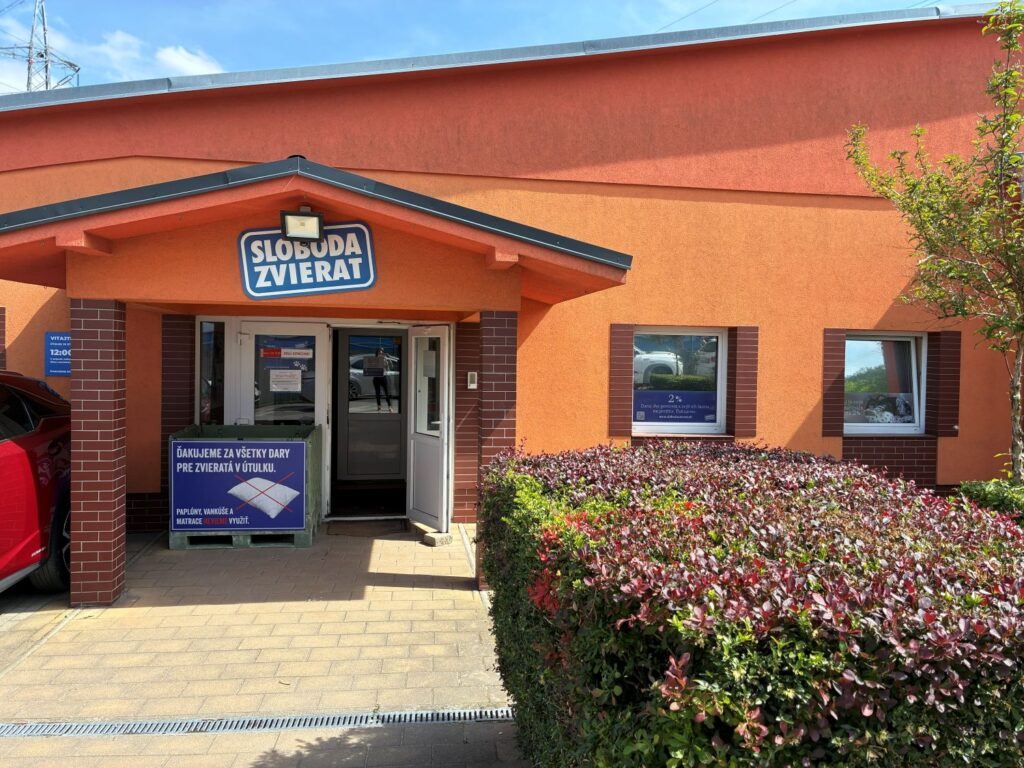
In 1995, Sloboda zvierat opened a shelter at Polianky 17 in Bratislava. It was a breakthrough moment — the first modern shelter of its kind in Slovakia.
It gradually expanded, modernized, and today it is one of the best‑equipped facilities in the country. Its location in the Bratislava Region, the richest region of Slovakia, played an important role in its development:
- higher standard of living,
- a greater concentration of companies,
- a strong donor community,
- a high number of volunteers.
All of this allowed the shelter to grow faster than other facilities in the country.
Statistics That Show the Scale of the Work
According to the annual reports of Sloboda zvierat (average over recent years):
- 2,500 animals per year pass through the shelter,
- 2,000 animals per year find a new home,
- 1,000+ field interventions are carried out annually by staff and volunteers,
- dozens of animals are removed from abusive conditions each year in cooperation with the police,
- hundreds of neutering procedures are performed annually as part of stray‑animal population control programs.
Over more than three decades, the organization has rescued tens of thousands of animals.
Funding: How the Largest Organization of Its Kind Operates
Sloboda zvierat has a stable and transparent funding model built on several pillars:
1. 2% Tax Donations
They bring the organization hundreds of thousands of euros every year. This is one of the most important sources, enabling long‑term planning.
2. Public Donations
Sloboda zvierat has one of the largest donor communities in Slovakia. Regular donations make up 20–30% of the budget.
3. Corporate Partners
Mainly from the Bratislava region — IT companies, banks, and corporations that support projects, adoptions, or renovations.
4. Grants and Projects
From European funds, foundations, and international organizations.
5. Cooperation with Municipalities and the Police
The organization provides animal capture, quarantine, expert assessments, and assists in removing abused animals.
6. Adoption Fees and Services
A small but steady part of the income.
The Personalities Who Shaped Sloboda zvierat
Sloboda zvierat is today the most recognized animal‑protection organization in Slovakia.
Behind its success stand the people who shaped it from its beginnings to its current form — a modern shelter with thousands of rescued animals.
Pavla Dugovičová – Long‑Time Chairwoman and the Face of Sloboda zvierat
Pavla Dugovičová is one of the most prominent figures in the history of Sloboda zvierat.
She has been active in the organization since the 1990s, and her name is closely associated with the development of the shelter Sloboda zvierat pod Brehmi, Karlova Ves, which people often search for as Sloboda zvierat Bratislava shelter.
Under her leadership, the following were established:
- modern adoption processes,
- a volunteer dog‑walker ID system,
- professional communication with the public,
- regular annual reports and transparent financing,
- cooperation with the police in cases of reporting animal cruelty.
Ladislav Ďurkovič – The Košice Activist Who Shaped Public Discourse
Ladislav Ďurkovič comes from Košice, which is a personally meaningful connection for me — since I am also from Košice and remember him from my teenage years as one of the first people to publicly promote vegetarianism in Slovakia. He was the main founder and the first long‑time chairman of the organization. He founded Sloboda zvierat in August 1992, originally in Košice. Later, he moved the activities to Bratislava, where in 1995 he established the very first professional animal shelter in Slovakia. He led the organization until 2003.
He worked in Sloboda zvierat during a period when the organization was growing and gaining media attention.
He brought:
- experience from civic campaigns (e.g., OK ’98),
- the ability to work with the public and the media,
- support for fieldwork and rescue operations,
- a strong emphasis on civic engagement.
What the Sloboda zvierat Shelter Looks Like Today: A Professional Center, Not “Just” a Shelter
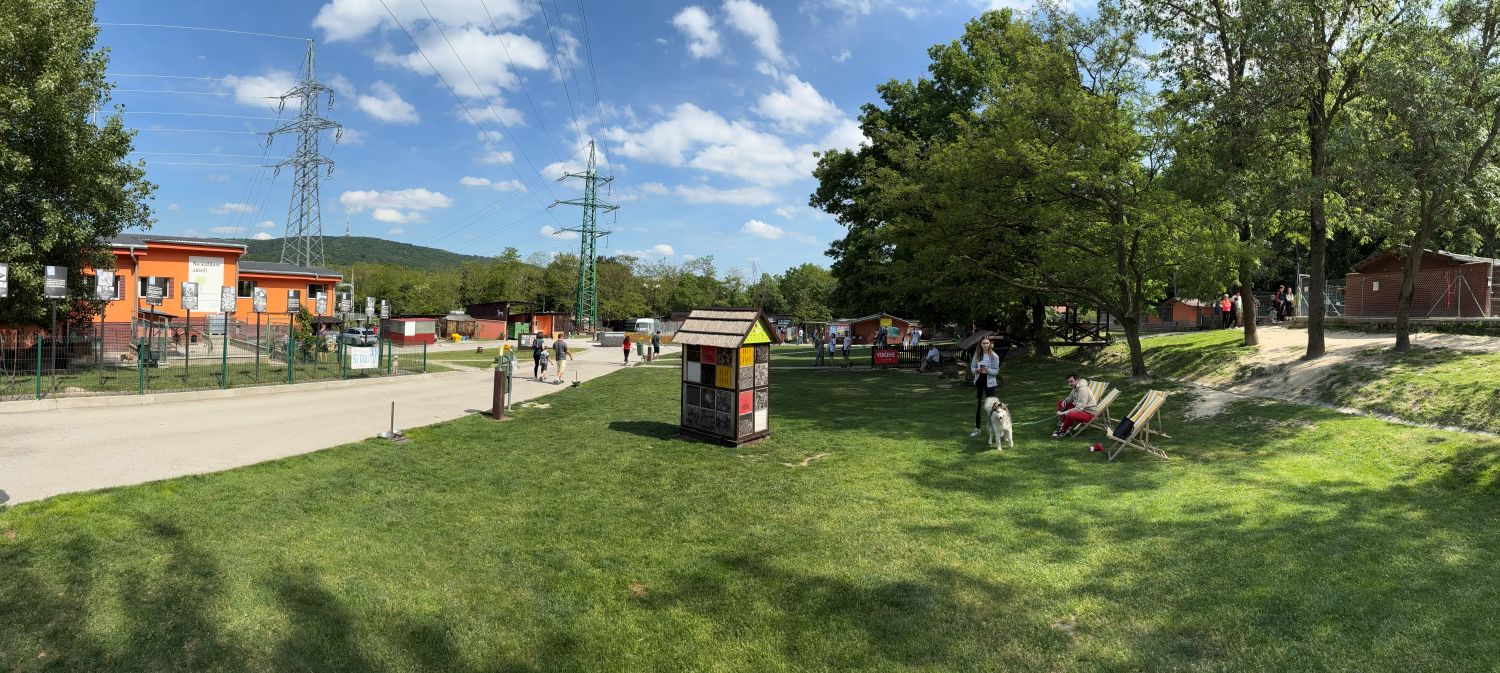
The Polianky shelter is now a modern facility. Visitors will find:
- A reception area where dog walkers, adoptions, and visits are registered. Dog walkers must have a walker ID card, which increases safety.
- A large green outdoor area with well‑maintained lawns.
- A dog pool, invaluable during the summer.
- An agility playground for socialization and training.
- Veterinary facilities, quarantine areas, and specialized enclosures.
- Separate spaces for puppies, senior dogs, cats, and animals recovering from procedures.
On weekends, the shelter is visited by dozens to hundreds of people — families, couples, students, seniors. The interest in dog walking is so high that queues often form.
My May Return: From Mlynská Dolina to Polianky
This May, I returned after some time to Mlynská dolina, where I once lived for five years during my university studies in the dormitories. Slávičie údolie was in full bloom. And suddenly I found myself standing in a place that brought back all the memories — of freedom, carefreeness, and that feeling that the world is open and everything is possible. After a half‑hour walk through the forest, I entered the Sloboda zvierat shelter.
Dog Walking: A Beautiful Dog, a Difficult Story
After about twenty minutes, I was assigned a dog. He was big and beautiful, but it was clear he had been through a difficult time. He had a shaved patch on his neck from a wound. I took him into the forest. And there I discovered that he was highly reactive and aggressive toward other dogs. He lunged, barked, and was hard to hold. He jumped on me several times and honestly — I did not feel safe.
I spent an hour with him, avoiding people and animals so we could both manage it. When I returned, I informed the caretaker that the dog had been very reactive. She simply nodded: “Yes, we know.”
And here comes my constructive feedback: Volunteers should be informed in advance about risky behavior in dogs. Not everyone has the experience or physical strength to handle a traumatized dog.
Conclusion: Respect, Facts, and Feedback
Sloboda zvierat is an exceptional organization that:
- has been operating for more than 30 years,
- has rescued tens of thousands of animals,
- has built the largest shelter in Slovakia,
- has professionalized animal protection,
- cooperates with the police, municipalities, and experts,
- and continues to stand strong thanks to its donors.
Sloboda zvierat is a symbol of the fact that even in a small country, an organization can emerge that survives decades, changes laws, saves thousands of lives, and builds a community that believes in kindness.
And for me personally, it is a place where the past meets the present. A place where I first began to believe that animals have the right to a dignified life. And a place I will always be happy to return to.
Stay updated—have the newest posts emailed to you.